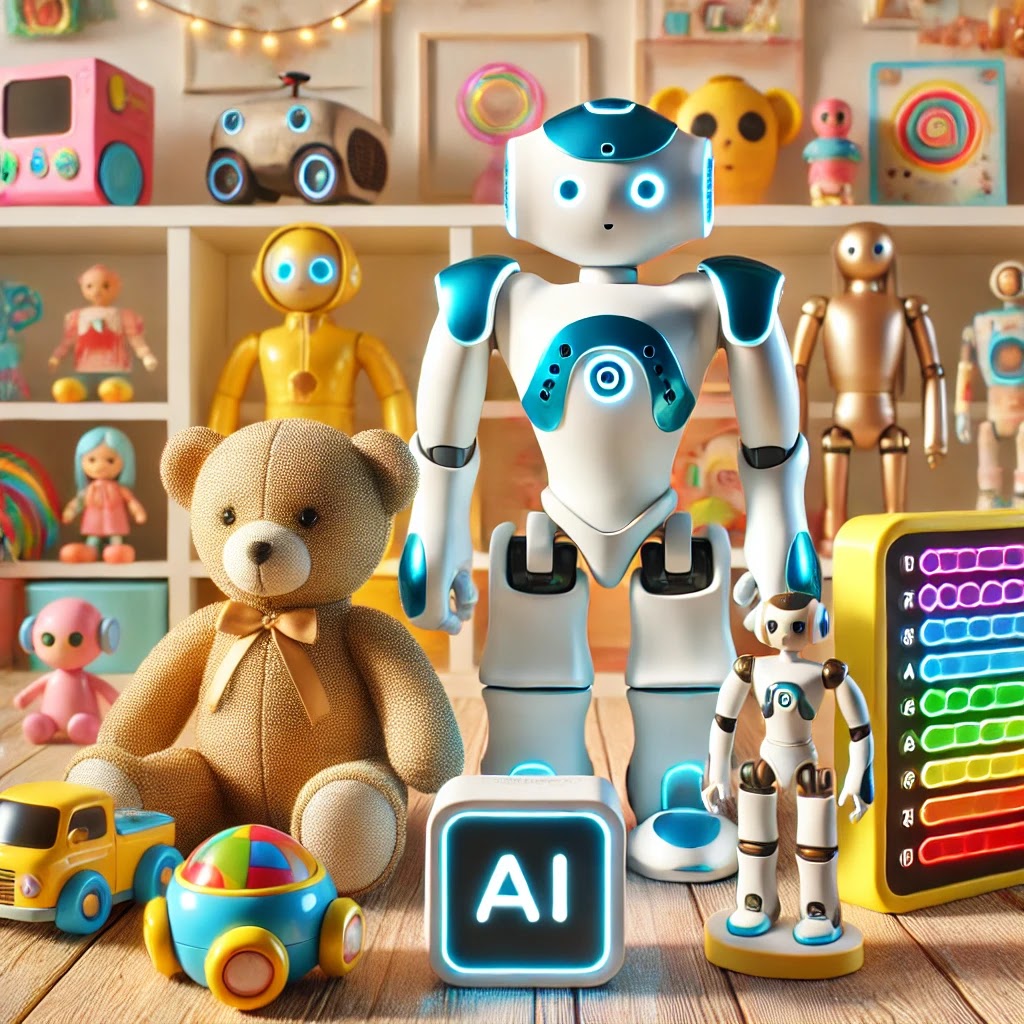
Involving AI in toy manufacturing can significantly enhance the design, production, and overall user experience of toys. Here are some ways AI can be integrated into the toy industry:
### 1. **Smart Toy Design:**
- **Customizable Toys:** AI can help in designing toys that can be customized based on a child's preferences, learning needs, or developmental stage. For instance, AI algorithms can suggest designs based on data about what children enjoy playing with at different ages.
- **Interactive Toys:** AI can be embedded in toys to make them interactive. These toys can learn from children's behaviors and adapt their responses accordingly, providing a more personalized and engaging play experience. Examples include AI-powered robots that can teach kids new skills or smart dolls that can hold conversations.
### 2. **Efficient Production:**
- **Optimized Manufacturing Processes:** AI can be used to streamline manufacturing processes by predicting demand, optimizing supply chain management, and reducing waste. Machine learning algorithms can forecast the types and quantities of toys likely to be popular, allowing manufacturers to adjust production accordingly.
- **Quality Control:** AI systems can be implemented to monitor and improve the quality of toys during production. Computer vision and machine learning can detect defects or inconsistencies in products, ensuring high-quality output.
### 3. **Enhanced Safety and Compliance:**
- **Safety Testing:** AI can assist in the automated testing of toys for safety, ensuring they meet regulatory standards. Machine learning models can predict potential safety hazards based on design and materials, allowing manufacturers to address issues before mass production.
- **Compliance Monitoring:** AI can also help in monitoring and ensuring that toys comply with various safety regulations globally, reducing the risk of recalls and enhancing consumer trust.
### 4. **Market Insights and Consumer Feedback:**
- **Consumer Behavior Analysis:** AI can analyze data from social media, online reviews, and sales patterns to gain insights into consumer preferences. This information can be used to develop new toys that are more likely to succeed in the market.
- **Personalized Marketing:** AI can help create targeted marketing campaigns by analyzing data on consumer preferences, buying habits, and demographic information.
### 5. **Post-Sale Engagement:**
- **AI-Powered Apps:** Toy manufacturers can create companion apps powered by AI that enhance the play experience. For example, a toy could be paired with an app that teaches kids new skills or provides educational content.
- **Learning and Development Tracking:** AI can track a child's interaction with a toy over time, providing feedback to parents or caregivers about the child's development and suggesting ways to enhance learning.
### 6. **Sustainability:**
- **Material Optimization:** AI can assist in selecting sustainable materials for toy manufacturing, minimizing environmental impact. It can also help in designing toys that are easier to recycle or upcycle.
- **Energy-Efficient Production:** AI-driven automation can optimize energy use in factories, contributing to more sustainable manufacturing practices.
### 7. **Data-Driven Innovation:**
- **Predictive Design:** AI can analyze trends in toy design and predict future popular themes or features, helping companies stay ahead in a competitive market.
- **Prototyping and Simulation:** AI can be used to create virtual prototypes of toys, allowing manufacturers to test and refine designs before physical production, saving time and resources.
Integrating AI in toy manufacturing not only boosts efficiency and innovation but also ensures that toys are safer, more engaging, and tailored to the needs of modern consumers.
Comments
Post a Comment